












What Is Legal Document Management Software?
Legal Document Management Software (DMS) is a sort of technology that enables legal teams maintain all of their legal papers safe, organized, easy to find, and able to work on jointly from one central system. Legal DMS is different from other ways to store files because it was created just for the legal profession. It lets you keep track of different versions of documents, see who has access to what, meet compliance needs, and work together on issues, clients, and teams.
A legal DMS is like a single source of truth for all legal papers. It helps lawyers do their jobs better, makes it less likely that problems will happen at work, and enables them to see and control papers at all times.
The Evolution of Legal Document Management
Traditionally, legal document management has been a tedious and time-consuming process for lawyers—often wasting countless billable hours on administrative work instead of legal strategy. Legal professionals relying on shared drives, email attachments, or manual filing systems frequently struggle with locating files, tracking document versions, maintaining consistency, and minimizing human error.
These inefficiencies not only slow down daily operations but also increase legal, financial, and compliance risks. As legal work becomes increasingly complex and fast-paced, firms and in-house legal teams can no longer afford outdated document management practices.
Regulatory pressure, remote and hybrid work styles, and the growing volume of legal paperwork have made systems that are just partially digital or manual useless. You have to use the correct legal technologies now.
We’ll talk about the best legal document management software (DMS) for 2023 in this article. We’ll talk about what difficulties it solves, what benefits it offers, and how to pick the best one for your legal team.
Why Modern Legal Teams Can’t Afford Poor Document Management in 2023
Legal teams today have to deal with a growing number of contracts, case files, compliance paperwork, internal regulations, and messages. They also need to work faster, cooperate along with colleagues from other areas, and follow all the rules.
Legal teams may face lot of challenges if they don’t have a centralized and smart document management system.
Low Value Time Loss
Lawyers and other legal professionals spend a lot of time looking for papers on shared drives, in emails, in local folders, and in archaic systems. Instead of this, you may be performing more important legal work, giving clients advice, or minimizing risks.
Version & Accuracy Issues
Teams often share different versions of the same document. If legal teams don’t have clear version history and audit trails, they could be working on old or wrong papers, which could lead to mistakes, delays, and even legal trouble. Gartner reports that poor information management and lack of version control are major contributors to operational inefficiencies and decision-making errors across professional services organizations.
Risks to security and privacy
Legal filings have a lot of personal information in them.It’s impossible to keep track of who can see, use, or share files when they’re shared by hand or saved on machines that aren’t connected.
Inefficient Collaboration
Legal work rarely happens in isolation. Poor document management slows collaboration between internal teams, clients, and external counsel—especially in hybrid or remote work environments.
Compliance and Audit Challenges
Meeting data protection regulations such as GDPR, PIPEDA, and industry-specific compliance standards becomes increasingly difficult without proper access controls, audit trails, and document retention policies.
A modern Legal Document Management System directly addresses these challenges by centralizing documents, automating workflows, enforcing governance rules, and enabling secure collaboration.

Key Benefits of Using Legal Document Management Software
You can figure out how a legal DMS helps with productivity, compliance, and teamwork in these ways:
- The administration has less work to do and it’s easier to access to documents.
- Version control and templates that have been used before make things more accurate.
- Work together safely with internal teams, clients, and outside lawyers.
- Streamlined eDiscovery and audit preparedness
- Less reliance on paper and lower operational costs
- Greater visibility into document status and performance
These benefits lead to better service delivery, lower risk, and more efficiency for both law firms and in-house legal teams.
What Are the 10 Key Features of a Legal Document Management System?
So, what should a Legal Document Management System include in 2023? These are the most important elements that modern legal teams should look for.
1. Documents can be stored in unlimited space
Legal teams have to deal with a lot of paperwork that they need to maintain for a long time. A modern DMS should be able to store as many contracts, pleadings, letters, photographs, and multimedia files as you need.
2. Storage that is both smart and easy to search
Users may find documents by using keywords, metadata, dates, and custom characteristics thanks to powerful search options. This makes it a lot easier to access information quickly.
3. Advanced Document Profiling
Tags, categories, statuses, and references are examples of metadata that should be added to documents. They should also be linked directly to clients, matters, cases, or tasks.
4. Versioning that is controlled
A legal DMS must keep track of changes in real time, keep a full version history, and have audit logs that demonstrate who made changes and when.
5. Templates that can be changed
Smart templates help legal teams write contracts and other agreements more quickly while keeping everything consistent and lowering the number of mistakes.
6. Making the Lifecycle Automatic
Everyone is responsible for every step of the process, from drafting to reviewing to approving to carrying out to storing, thanks to automated processes.
7. E-signature Workflows
E-signature capabilities that are built in or added on speed up the process and get rid of the need to sign documents by hand.
8. Simple to reach
Lawyers should be able to get to papers from any device, at any time, and from any place. This will help with working from home and in a hybrid way.
9. Permissions and Security
You need role-based access restrictions, encryption, and compliance with international security standards to keep sensitive legal data safe.
10. Integrations
A solid legal DMS works well with email, business apps, collaborative tools, and systems for managing a law practice.
Lexzur’s CONTRA: More Than Just a Legal DMS
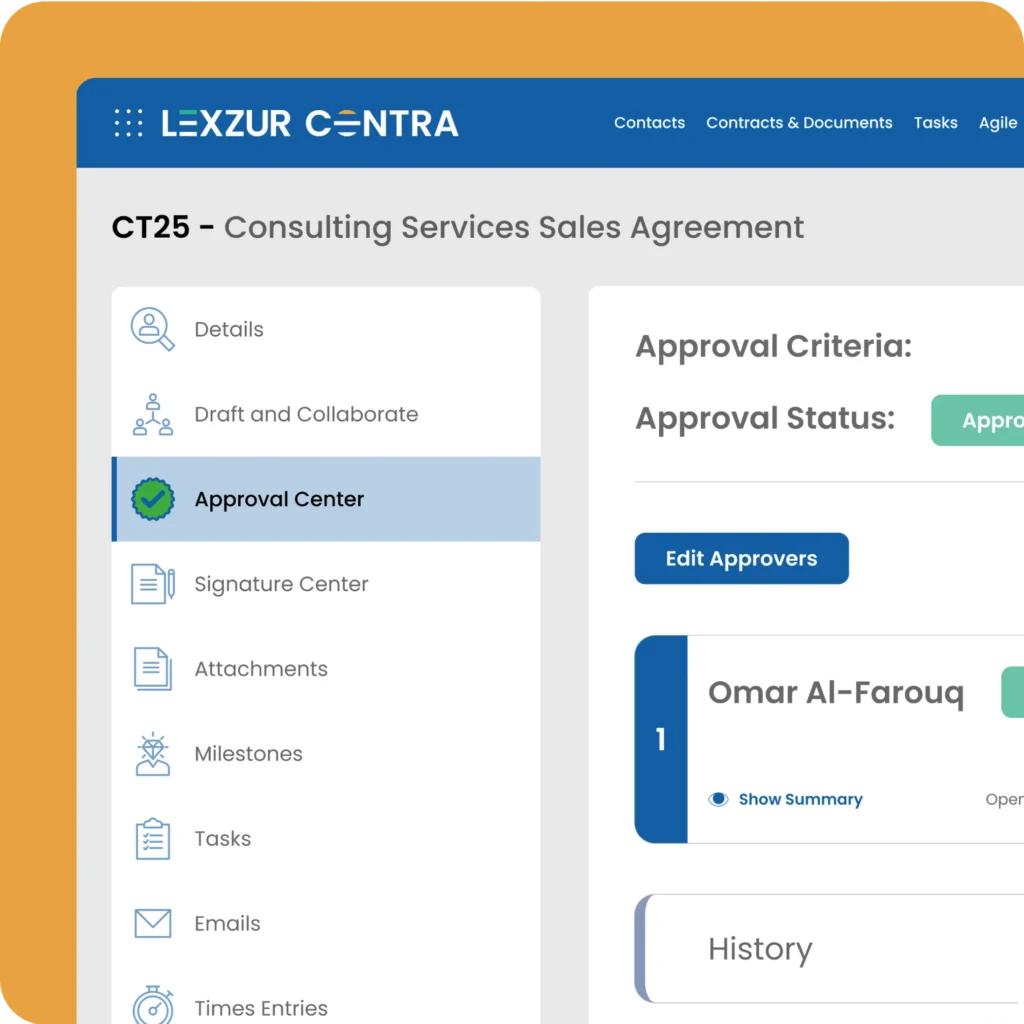
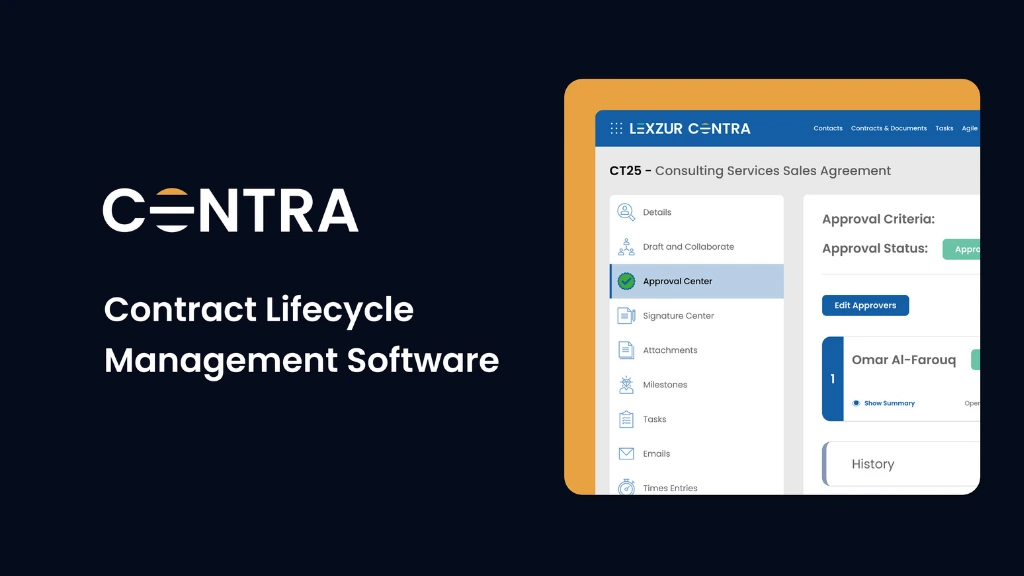
Lexzur’s CONTRA is a clever legal document management software that does more than just what a regular DMS does. In addition to safe document preservation, CONTRA lets legal teams:
- Make drafts using templates that you can change
- Work together on documents in real time
- Dashboards let you keep an eye on KPIs and performance measures.
- Make approvals and document lifecycles automatic
- Connect to more than 5,000 apps, such as Office 365 and Google Workspace.
CONTRA can be used in the cloud or on-premises, giving businesses and legal departments with diverse IT, security, and compliance needs more options.
How to Choose the Right Legal DMS
When looking at Legal Document Management Software, legal teams should think about the following:
- Security and compliance: encryption standards, data residency, and certifications
- Easy to use: lawyers and legal staff utilize it
- Scalability: the ability to grow with the business
- Integration capabilities: Works with the legal and business tools you already have
- Customization and automation: the ability to change things to fit legal workflows
Choosing the right DMS isn’t just a tech choice; it’s a wise move for your law firm’s future.
Specific Use Cases for Legal Document Management Software
Legal DMS solutions support a wide range of use cases, including:
- Law firms managing case files, pleadings, and court documents
- In-house legal teams handling vendor, customer, and compliance contracts
- Corporate legal departments coordinating multi-level approvals
- Legal operations teams focused on reporting, efficiency, and governance
Key Requirements for Modern Legal Teams
To future-proof document management, legal teams should ensure their DMS supports:
- Cloud and on-premise deployment options
- Advanced search and metadata management
- Workflows and approvals that happen automatically
- Safe working together with people outside of your organization
- Dashboards for reporting and analysis
Frequently Asked Questions (FAQ)
Is Legal DMS different from regular document storage?
Yes. Legal DMS solutions are purpose-built for legal workflows, security, and compliance—unlike generic file storage tools.
Can Legal DMS support remote work?
Absolutely. Modern DMS platforms enable secure access and collaboration from anywhere.
Is Legal DMS suitable for small firms?
Yes. Scalable legal DMS solutions benefit solo practitioners, small firms, and large enterprises alike.
About Lexzur
Lexzur is a legal technology provider offering integrated solutions for document management, contract lifecycle management, and legal operations. Its platforms enable legal teams update their work, make it more efficient, and lower their risk.
In 2023, picking the proper Legal Document Management Software can change the way legal teams work by making them more productive, lowering risk, and letting them focus more on high-value legal work.
Check out these links to learn more about the best ways to manage legal documents:
- https://www.lexzur.com/document-workflow-management/
- https://www.lexzur.com/the-best-legal-document-management-software/
- https://www.lexzur.com/contract-management-software-for-legal-departments/
👉 Request a demo today to find out more about Contra by Lexzur.


Leave a comment