


What is driving modern organizations to replace legacy storage with intelligent systems?
Every enterprise today is under the same silent pressure: documents keep piling up, accumulating; workflows keep getting bigger; and teams in legal, procurement, HR, and finance all depend on files that are rarely in one place.
This is exactly why document management software has shifted from a “nice-to-have” to the backbone of modern operations.
But the winning systems in 2025 look very different from the traditional tools of the past.
Why is traditional document storage no longer enough for modern organizations?
The old model was simple: store files, share them, archive them. That’s no longer enough.
Modern organizations now rely on a document management system dms that goes far beyond basic storage.
To truly manage documents at scale, you need three foundational layers:
1. Centralization
A structured, secure repository where every contract, policy, HR record, or case file is exactly where it should be.
2. Intelligence
AI that can read a document, summarize it, translate it, identify missing details, classify it correctly, and surface insights instantly.
3. Governance
Role-based permissions, complete audit trails, version control, and a compliance-ready structure.
When these layers work together, dms document management system stops being reactive—it becomes operational clarity.
Why do enterprises still struggle despite having adequate storage systems?
Across the clients we work with, the common issues look almost identical:
Long search times because of inconsistent naming; multiple copies of the same document dispersed across drives;loss of visibility during approvals;lack of a central location to track edits or comments; and compliance risks from unstructured archives
It’s rarely about “storage.”
It’s about fragmentation.
How does Lexzur approach document management differently?
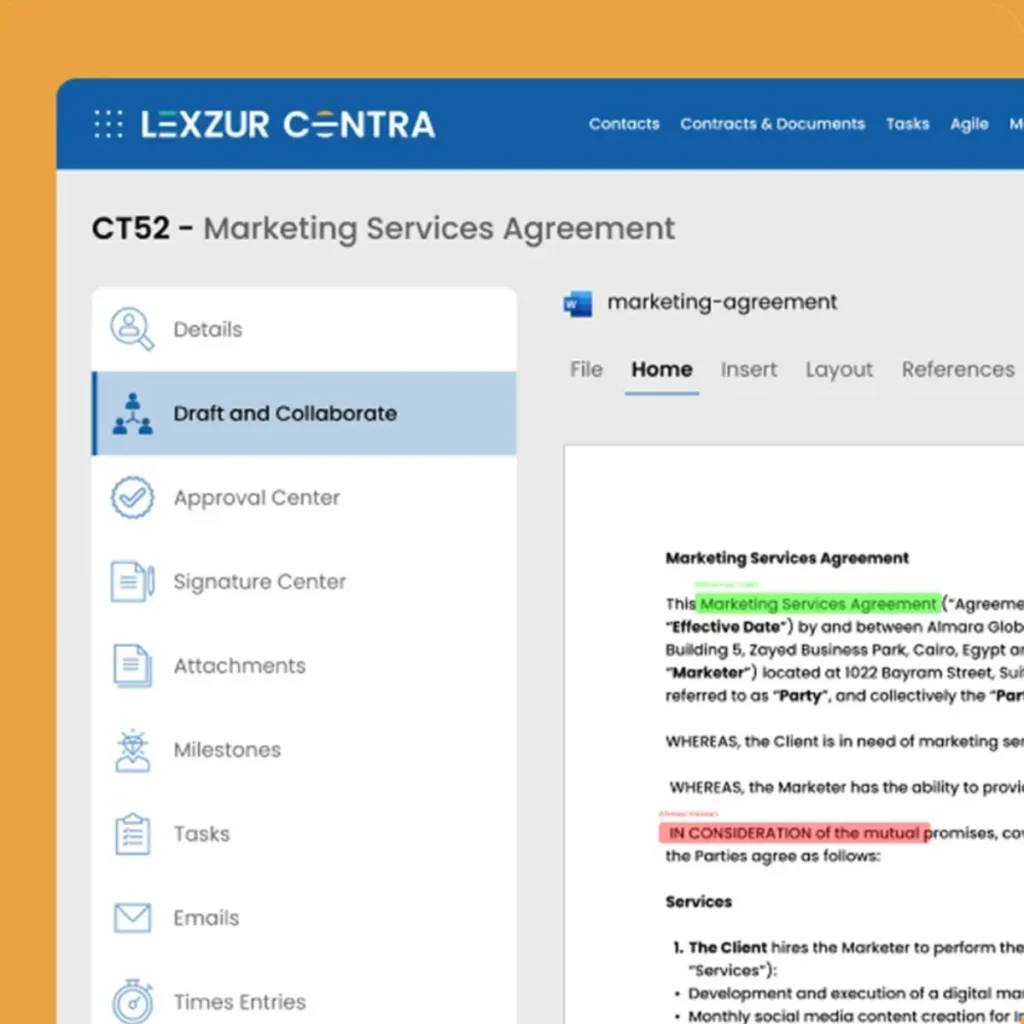
With Lexzur, documents aren’t treated as static files; they are live components of wider workflows.
One Repository, Connected to Everything
Documents in Lexzur move with your processes: contracts flow through CONTRA, case files through PRACTICE, and all supporting material stays traceable within one ecosystem.
AI That Works the Way Enterprises Actually Work
LEXA doesn’t just summarize documents—it surfaces risks, extracts obligations, identifies missing elements, translates instantly, and classifies content without manual tagging.
Collaboration Without Friction
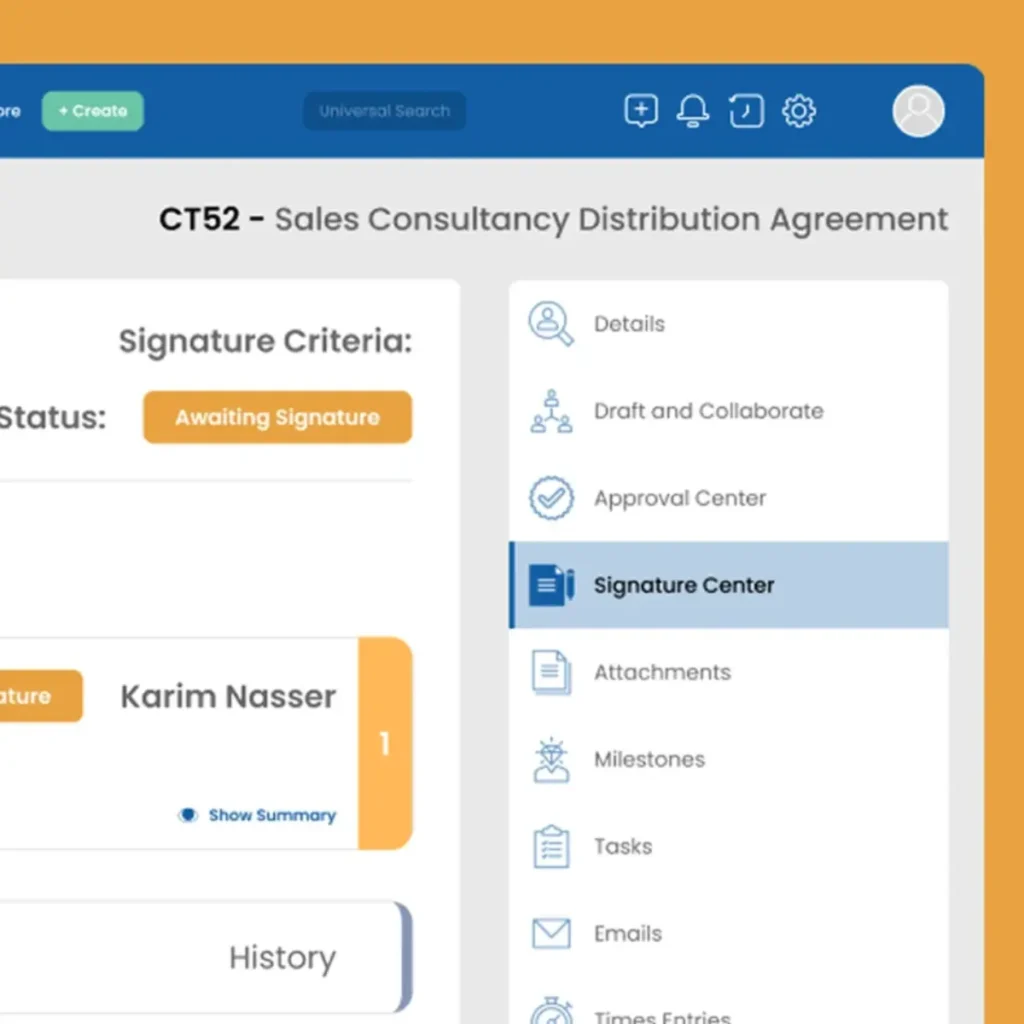
Approvals, comments, versioning, notifications, and integrated e-signatures make cross-department work faster and more predictable.
Compliance Built Into the Structure
Access controls, retention rules, and audit trails ensure that every document is stored, accessed, and managed with governance in mind.
How does modern DMS software improve enterprise operations?
Organizations that have adopted modern document management system dms software see significant measurable improvements:
Faster contract and case cycles, less exposure to compliance, shorter search and review times, improved departmental visibility, improved coordination between legal, procurement, HR, and finance, and more.
Many have replaced legacy software for document control with tools that are AI-enabled and workflow-centric — transforming how teams work.
Final Thought
Document management used to be administrative.
Today, it’s strategic.
Enterprises that modernize with a leading document management system dms software gain speed, accuracy, and control across every workflow that depends on a document — which is essentially every workflow.

Leave a comment